Event Description
Shubho Drishti & Mala Badal
So in a Bengali wedding: first is the bride’s entry- picture this: the air fills with ululations (those joyful trills you’ll hear from the women), conch shells blow (believed to clear away bad vibes), and the bride walks in, surrounded by family.
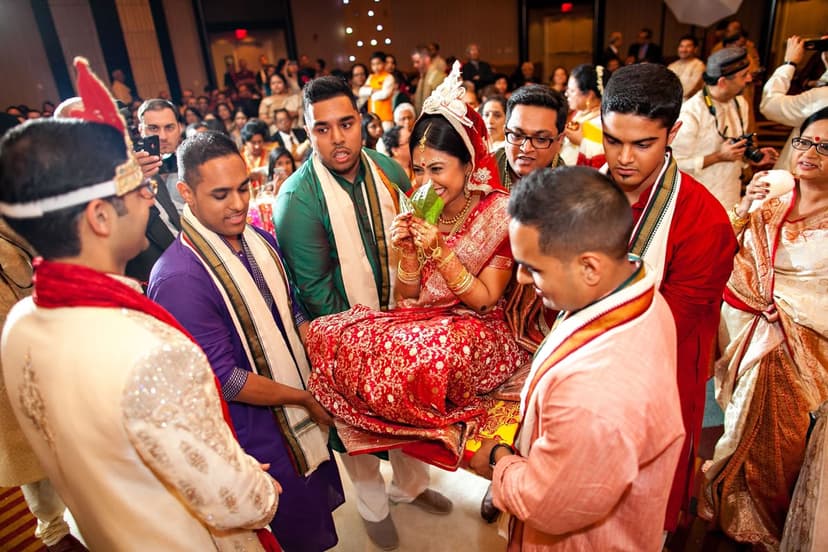
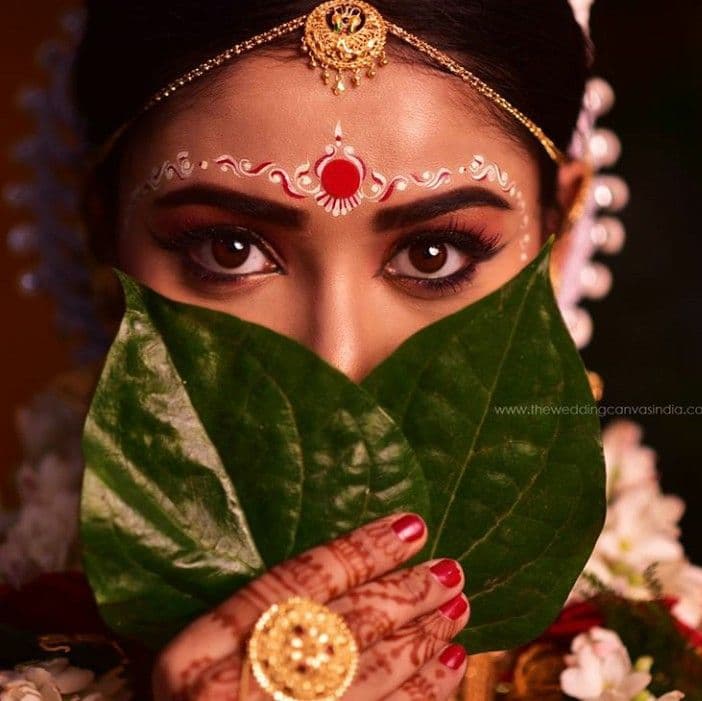
Then comes the quirky bit unique to Bengali weddings: the Saat Paak. The bride is carried (traditionally on a wooden stool, though these days walking works just fine!) around the groom seven times while covering her face with betel leaves. Why seven? Because in Hindu tradition, seven is considered sacred and symbolises tying seven knots of destiny together.
Think of it as circling your future before saying, “Yep, I’m in.”
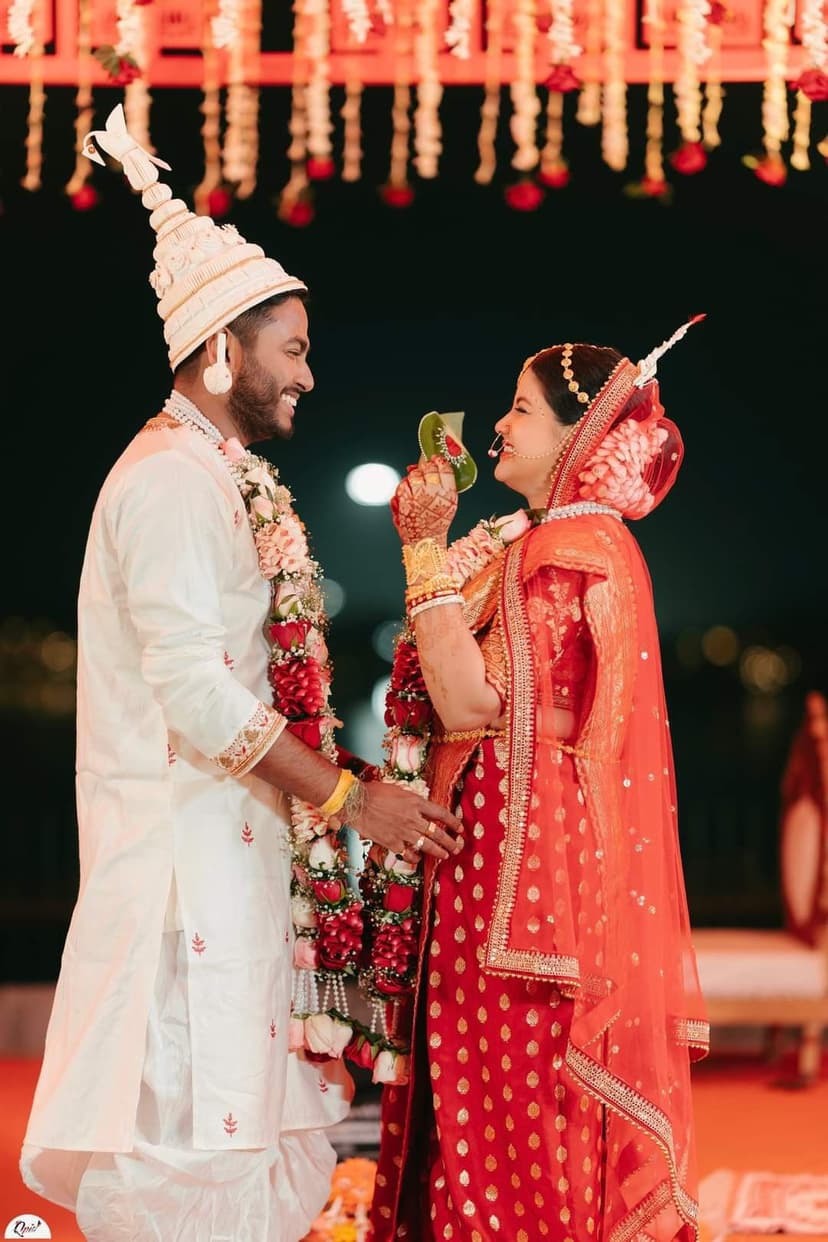
Now for the suspenseful reveal-Shubho Drishti (“auspicious sight”). After all that circling and hiding, the bride finally lowers the betel leaves, and bride and groom lock eyes for the first time during the wedding. The idea is that their first gaze in front of everyone blesses them with a lifetime of love and harmony. It’s basically the ultimate “first look,” but with a whole crowd cheering you on.
Finally, things get fun with the Mala Badal (or Varmala) ceremony, where the couple exchange floral garlands. Officially, it means they’re accepting each other as life partners. Unofficially? It’s a competitive sport. Friends and cousins on both sides usually try to lift the bride or groom higher so the other has to really stretch (or jump!) to put the garland on. It’s loud, hilarious, and the perfect icebreaker-because nothing bonds two families faster than a playful garland face-off.